ISOLATION Pty Ltd
Technical Solutions

Structural Bearings

Project-specific structural bearing engineering for bridges and infrastructure. We assess vertical loads, rotations and movement demands to develop suitable bearing configurations.

Elastomeric Bearings

Elastomeric bearings consist of natural or synthetic rubber layers, typically reinforced with vulcanised steel shims. They accommodate structural movements and rotations through elastic deformation without mechanical sliding interfaces.

Key Advantages

  • Well-established and extensively researched technology, supported by decades of experimental investigation and proven field performance.
  • Simple, robust construction with minimal maintenance requirements.
  • Cost-effective solutions for moderate loads, movements and rotations.
  • Elastic restoring capability and adaptable stiffness characteristics.
  • Customisable geometries and material properties to suit project requirements.
  • Long service life when properly designed, manufactured and tested.
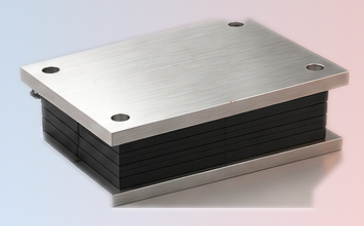
Approved image of Elastomeric Bearings

Pot Bearings

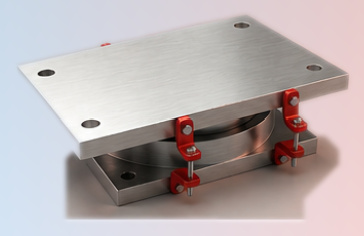
Pot bearings consist of an elastomeric disc confined within a steel pot and compressed by a closely fitted steel piston. The confined elastomer behaves in a near-incompressible manner, providing high vertical load capacity while accommodating structural rotations through its deformation.

Depending on the configuration, pot bearings may incorporate low-friction sliding interfaces, guide elements and restraints to accommodate or restrict horizontal movements.

Key Advantages

  • High vertical load capacity within a compact bearing configuration.
  • Well-established technology with extensive practical experience in bridge and infrastructure applications.
  • Accommodation of structural rotations under high compressive loads.
  • Versatile fixed, guided and free-sliding configurations to suit different structural articulation requirements.
Approved image of Pot Bearings

Spherical Bearings

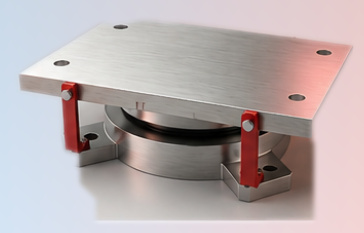
Spherical bearings accommodate structural rotations through a curved sliding interface between a convex calotte and a matching concave surface, incorporating engineered low-friction sliding materials.

The spherical interface enables rotation about multiple axes, while additional planar sliding interfaces, guides and restraints may be incorporated to accommodate or restrict horizontal movements.

Key Advantages

  • High vertical load capacity within a relatively compact bearing arrangement.
  • Accommodation of large structural rotations about multiple axes.
  • Low rotational resistance through engineered sliding interfaces.
  • Versatile fixed, guided and free-sliding configurations to suit different structural articulation requirements.
  • Suitable for demanding bridge and infrastructure applications involving high loads, large rotations and complex movement requirements.
Approved image of Spherical Bearings

Engineering-led bearing selection

We consider load combinations, movement and rotation requirements, structural interfaces, durability and applicable project standards when assessing bearing systems.

Discuss your project